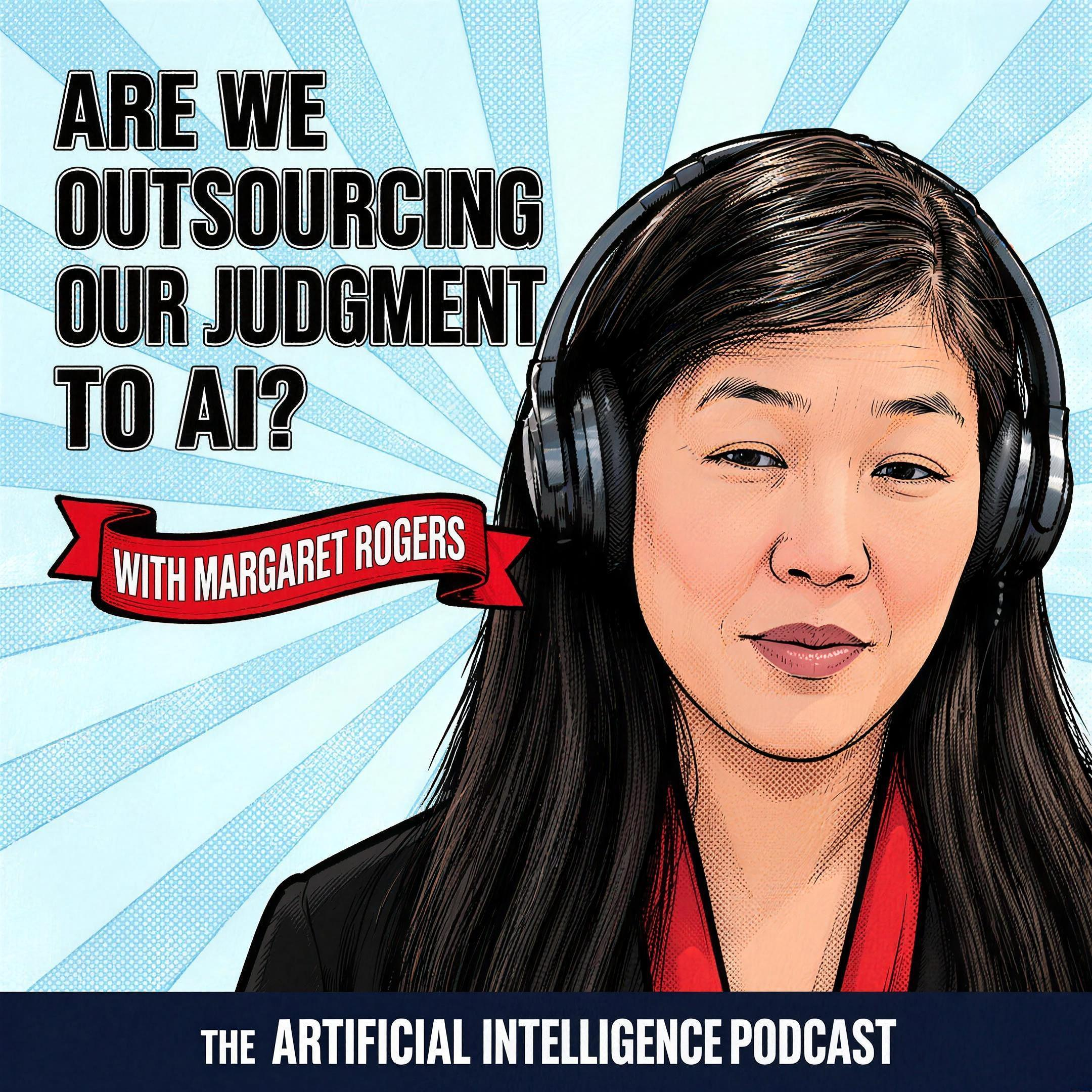
AI gets faster and cheaper every quarter, but the people using it still decide the outcome. Jonathan Green talks with Margaret Rogers, who works with organizations on strategy, people and technology, about why AI's probabilistic answers make human judgment non-optional, why messy data and broken processes get amplified rather than fixed, which durable skills are worth protecting, and why governance starts with the vendor contract.
Key Takeaways:
- AI is probabilistic, so judgment cannot be handed off. Models give directionally correct answers most of the time, hallucinations still happen, and someone has to check the output before it matters.
- Bad data and broken processes get amplified, not fixed. Feeding an unorganized set of books to an AI tool produces miscategorized spending, so clean the data and the process first.
- The durable skills are judgment, systems thinking, resilience and emotional intelligence. Margaret's warning is that the easy path of letting AI do the work erodes the capacity to learn.
- Read the contract before you trust the vendor. Zero data retention and a clear list of the underlying models should be in writing, and even then some information can still end up in the model, so treat your IP as exposed.
- People sabotage AI that they think is built to replace them. Start with the change that gives people back their time, and train them for the next phase of the business.
Notable Quotes:
"I talk about the dangers of outsourcing your cognitive capability and your critical thinking skills." — Margaret Rogers
"Can you actually get somebody to compress four years worth of experience into one? We don't know." — Margaret Rogers
Connect with Margaret Rogers:
LinkedIn: https://www.linkedin.com/in/margaretpengrogers
Enjoyed this? Follow The Artificial Intelligence Podcast and send it to whoever keeps telling you that AI will do the thinking for them.
Full transcript
when I started an IT in the nineties, there was a server room. You knew where the data was because you could point to you go, yeah, it's the room with the extra air conditioners and the weird lock on the door. And so Yeah, yeah. A hundred percent. Yeah. It's it's it is it is really fascinating 'cause you're you know, a couple of years ago they were like, You can't build your own L L You can't you don't build your own models, it's just impossible.
Now it's getting within reach on a more regular basis and and with the open weight models, it's it's just gonna be really fascinating about where some of this stuff goes, over the next several years. Yeah. Because I don't, you know, it And with Anthropic coming out with their IPO now, now that they're scheduled to come out with their IPO, I think that's gonna be a fascinating, fascinating view. And somebody was telling me that like these large language model companies are just too large to fail.
And I was like, you know, I never say never. You know. I remember beta and VHS. I I have a yeah. I know. This one's better, but this one wins.
I remember when Blockbuster made everything disappear. we always think that I think I one of my big beliefs now is that I think tokens are going to become a commodity because you look at Kimmy or Deep Seeker, the models or even the the new LeCoc model from France, and they're like three weeks behind the American models, where they were like a year behind or six months behind.
And it's like, Well, I can have a a model that's two percent less powerful for 150th the price, it starts to put that downward pressure. And I think the problem with those companies with OpenAI and Anthropic, it's the same thing. They don't they sell one thing. Whereas you look at Google, they sell the office suite. They sell They sell so many different things. Yeah.
for them, the AI is like a bonus, and that's such a different position where you go, Hey, you get the entire office suite. I was just talking to one of my client companies today, and they were like, the head of IT goes, I want I want the co-pilot, right? I want the big copilot contract for my account. And the main other IT vendors you don't want it's terrible. It's like, yeah, but it's inside our ecosystem and we're already paying them a ton of money.
So it's all in the box. And I was like, that's exactly the selling point. The convenience has so much value. And that's the advantage. And I think that like I was like, if OpenI is building all the wrong things, they should build an office suite. That that's what I said about them too, because I said the w the this is this is a playbook that's been used before.
When Microsoft went into Azure and and developed Azure, they were like, We'll give you Azure for free, for a certain period of time. Let's start to use our products. And they've always done that. They've always been given licenses because Hey Uc. I already have the productivity licenses. I'm just gonna tack it on. It's only an incremental. Google of course, did that.
AWS is actually interesting because they don't have that. they just have a lot of market penetration right now on on your B2B side that it's again also easy for easier for them to tack on to these these areas right now. It's just really, really fascinating and to your point. Like I remember I think it was last year OpenAI announced they were like, We're gonna do professional services and I'm like, You're gonna
Yeah, they I think that It's they're using the ro they just think that the hype can sell forever. And it's like, well, it has to solve a problem. They spent so much money on the video platform. And I'm like, well, what is the use case? I I and I talk to a lot of startups too. And I talk to so many startups and and they're always I'm like, Well, you have a feature.
You're the danger of an AI startup is that I remember a few years ago, two of my sisters are fashion designers, so I'm little bit aware of that world. And I remember there was the all these startups that you could take your picture and show yourself in different outfits. And then Google yeah yeah yeah. released Google released a free one. And all those Yeah. startups went down to zero in one day. And that's the danger.
And I think that there's a lot of, I was surprised I talked to many VC firms and I was like, you must have a total logical thesis. And they go, no, we invest in things we think are probably terrible but might work. It's all FOMO. It's like 98% emotional investing. I talk, One of the firms I talked to, they have 18 hours to decide on each thing. And I was like, there's no due diligence. that's such a short amount of time.
And they're doing, they're like, we're doing a couple million dollar checks. And then even the firms I talked to that are doing the hundred million dollar checks, they maybe have a week or two weeks. And it's like such a small amount of time that it's all that's why I think the a lot of the investing is really big. But Yeah. like same thing with the hyper centers. Mm-hmm. everyone's like, we're gonna need all this compute.
And I'm like, Well, every year of my life computers have gotten smaller. My first computer didn't even have a hard drive. And I feel like there's one thing I'm sure of, it's that computers will get faster and smaller. So Yeah. Yeah. I like we'll build these massive data centers and then the compute then you'll be using ten percent of it for computers and the rest will just be empty because we've built more efficient machines. So Yeah. that's some of the stuff I've been watching a lot.
I think that, but I think Google is just they're gonna win. I for they made so many mistakes, with their fur early A models. And I was like, but they have so much time. They have so much runway. And that's the thing that a lot of people like and maybe now people are noticing now that especially when they release their new model, forget what it's called. They always have a new cool name that suddenly everyone's like, this might be the game changer.
And I was Yeah, they took them five years, but they had the five years. Whereas I think if OpenAI does an IPO fast enough, they'll go out of business. They're trying to borrow. eighty billion dollars last week just to get to their IPO and I'm like, that's that's a red flag for me. Yeah. Yeah. I I I think you're right. it's so two years ago I had a conversation with somebody who was in the healthcare space and he was like, he was the CIO.
He was he was like, I'm gonna go be visiting all three major cloud vendors, and you tell me what are the questions I need to be asking them. He's like, I just don't think, for instance, Amazon's main player. And I said he's he's like, they are so far behind. I said, Yeah, but Amazon has a buttload of capital that they can throw behind this thing. And once they go, they really go and they'll go fast and furious. And they have a lot of good market penetration.
So while you might feel like right now the leaders are Microsoft and Google, Google was not that far ahead, frankly, from Microsoft. And Microsoft's first release of Copilot was a cluster. It was terrible. it was, you know, I Amazon is going to catch up. So I think y you gotta ask different questions from from what you're thinking and know that they're just gonna get ahead.
Yeah, I look at what they spend on if they want to make a TV show, they made this Amazon TV show called Citadel that no one's watched. They made five different versions in five different languages and they spent a billion dollars. If they're gonna do that on a TV show like that no one has heard of, like no one's watched Yeah. it, like that. You know what I mean? they can on the things they care about, they can go. And that's it.
I look at what everyone's trying to figure out their moat now. That's a very common conversation to have is like what's my moat gonna be? Is it hardware? I talked to hard company earlier today. And 'cause everyone's afraid AI will cover the the moat. I'm like I even think the AI companies, if they're just selling tokens, their moat is that their AI is the smartest. And that ranking changes. Every two or three days. There's this constant. Yeah.
I have people that are like, hey, what model are you using? I'm like, I'm using Claude. They go, Gross. It's Chat Mm-hmm. GPT now. Claude is so three days ago. It's like so fast. And Yeah. Yeah. I think that's what shows you that like it's the they're looking, it's the exciting part, but it's the boring part that's the real value.
I actually think. when I interviewed all the biotech companies, informatics, I think it's gonna be huge for the next few years because everyone who's had these bad AI pilots, they load in all their data, but they don't organize it first. Mm-hmm. And now I'm seeing I just I've talked to a few companies like, Yeah, we tried that. Now we're we have to start over because you have to figure out what are your categories. You have cl cleanliness.
Yeah. we're we're we talk to people all the time. It's like regardless of the the innovation, the basics still play out, right? The basic principles, first principles are still valid. And so folks that are trying to do processes have or automate processes have crappy processes to begin with. people who are trying to do things in artificial intelligence have crappy data to begin with.
And so you you can't you can't expect the same level of output rather than if you had the clean room of data and the clean in and refined processes. It just doesn't play out that way. I think it's because the way we describe AI is like it's so powerful. You think I can shove all my boxes of data and it's so smart it will figure it out. Mm-hmm. And that is the misleading language. the my biggest problem is that we keep Yeah, we keep saying
It's so smart. It's not smart. that and it's like, yeah, it's like I I think of it as the boss's nephew who you have to deal with because the boss hired him. And he's really good at one thing, he knows a lot about computers, but he's dumb about everything else, or something like that. So it's like sometimes really smart and sometimes shockingly dumb. Yeah.
I was doing a huge audit and I said, make sure everything's working before we show it to the client, take a screenshot of everything. And then I looked at the screenshot and it error, error, error, error. I get, did you look at any of the screenshots? He goes, No, you didn't tell me to. And I was like, Whoa, that's Yeah. that's horrifying. And it's all these it always does it. And It's always like, I'm so sorry, that one's on me.
I'm like, it doesn't matter if it's on you. Great language, but they're you're not the one who will get fired. And it's like these little things that first principles, you're so right that like I was just talking to a big accounting company earlier today, an amazing episode. And it was like, if you feed all of your books to the AI, but they're not organized, you haven't pre categorized all your spending, it's gonna be in your PL will be crazy.
Because it will it will miscategorize stuff all the time. And it's Mm-hmm. exactly that data cleanliness. And then I always I love when a like a project, they go, sorry, we have a super detailed process. It's really methodical. We have really we have an SOP for every step. We're sorry, it's so complicated. I'm like, no, that's literally the best thing you could tell me. If like records are very like Yeah, exactly. whereas sometimes people are like, I just want it better.
Or like they'll say something like, I want it to be really kinetic. And I'm like, I don't I don't know what that means. And I don't like it sounds I don't know what that means either. really cool. It's like a really cool sounding word. Like and so it's exactly that. I think it would it's AI is an accelerant, but if you don't know what the process you're replacing, where you're starting from and where you want to end up, it's just gonna crash your car faster. Yeah.
One of the big everyone's really worried about their career disappearing because of AI. And I've been trying to talk to people about what are the skills you think that are AI proof. As I've been auditing my own business, I've realized the ability to connect with people and get amazing guests on my podcast. a podcast has been exploding the number of guests I'm getting. I'm like, that's AI can't do that.
AI can't form relationships or chat to people. that's thing that's become my focus for the and that's really where I'm moving towards in my business. And I wonder what other areas you think for people who are really worried that their career will disappear, what are the parts of their skill set or the parts of their work life that they should focus on to be able to endure this tumultuous time?
Yeah, I I think a lot of the things that we talk about are for sure the durable skills. and AI is not helping with those durable skills. So when we talk about things like everything from almost like wayfinding, like are you able to navigate decisions and transitions, resiliency, being able to work through the hard problems, I call it intellectual Resilience, right? You have to be able to go through the difficult things to get to the other side.
We're seeing challenges and or or emerging potential for challenges and things like critical thinking. Really, we're high on systems thinking. Like, are people being taught systems thinking? And that is an area where the more you understand about a system and the more practice you are at it, the better you are effective. At figuring out the right use cases in which AI can actually be additive or creative to your business or to whatever organization you happen to be working with.
So that side of the house is really huge for us. Emotional intelligence continues to be a huge piece, being able to be adaptable, of course, because of everything that's going on. We're just moving at a speed of pace. And then I think a huge component here is judgment. this year we were also every year I visit every single one of our offices.
And one of the areas that we really hyper focused on, especially in this time, was this concept of, the smart failures or and it's really based on a lot of the things that Amy Edmondson has been talking about in terms of the Brave New or Fearless Organization, I think is her book. And there's a huge component of this, which is intention and design of a system and a and a small-scale experiment that is going to help you learn.
The thing that we really highlight is that you have to be good at learning in this day and age. And if you're not good about accepting, embracing the difficulty that and the discomfort that people go through, that is actually a natural human. reaction and condition that helps us learn and retain information, then you're gonna end up in a situation where you're going to erode your capacity to be able to learn.
We see this all the time right now with everything from social media. and there are wonderful studies that show that our attention span as a society is getting shorter and shorter. Like we can't hold our attention into things like reading books for long periods of time because our social Media is really geared towards capturing attention. And there are wonderful now studies over the long term because it's been around long enough where we now know, we we probably should have created some space.
This this idea of capturing my attention and having to scroll and and having some satisfaction but feeling really stressed about it is creating and rewiring how humans are kind of operating on a day-to-day basis. So There are quite a there's a huge list of things that we have to create opportunities for people to develop and have this wherewithal to want to develop them, understanding the longer term repercussions are just around the corner if we don't.
Yeah, I've started to notice that skills that were ubiquitous when I was younger, patience, like having a conversation with a stranger are becoming rare skills. Like the number of people who've never called or order a pizza over the phone or make a reservation and find that challenging. Mm-hmm.
I've started to notice and even like don't even coming into the like if someone can come into the office and answer a phone when a stranger calls and not get uncomfortable, they're That's a rare skill, which used to be the most common skill. And because we're so used to ordering through apps, now you can order food and the contactless delivery. So you don't have to look the delivery driver in the eyes.
Used to have to be like a really famous musician or something to tell people not to look at you. And now Ha ha it's so crazy. And we don't realize there's a cost to that. And I I'm discovering things like, and so I have five kids. I'm always thinking, what are the skills that are future proof? And it's like being able to go outside, being able to be a little bit uncomfortable. my son fell and skinned his knees, both his knees the other week.
And I was like, my gosh, I used to do that. That's great. Cause he's Mm-hmm. pushing himself a little bit. My wife was, of course, horrified. And I was no, it's not a major injury. Skinning your knees, you just fall while running. It's not a really bad thing. And it's getting out into the world. I took away his his playing on the tablet too much. I took away and goes fine. Then I'll just go outside and play soccer with my friends.
And I was like, That's a crazy threat. That's what I want you doing. literally. Yeah, exactly. Yes. That and so many kids are too tablet-y. One of my friends talks about how like no one knows how to be bored, like sit at a table while your parents eat dinner and do that, and that's kind Be bored. Yeah. of disappearing. And I try to find that balance. And I think that those are the skills that are like really strong, the interpersonal skills.
Cause I kind of see a world where like the paperwork is done by AI, but the communication is done by humans and the planning and the mistake that I always try to watch out for is it's so easy to not check the AI's work. it does it good the first three times. So then you slowly stop paying as much attention and that's when it starts to drift. And sometimes we like off site our decision making.
So like I'll let the AI choose what restaurant I go to tonight. I'm like, don't do that. It's never eaten there. Yeah. Yeah. I I talk about the dangers of outsourcing your cognitive capability and your critical thinking skills. I I think that that's a very, very dangerous and slippery slope because to your point, things become easier, you become more dependent, and all of a sudden you can't string two sentences together in the writing side.
And where where I think people are starting to a generative AI, these foundation models are almost like a siren, right? They're calling to you, tempting you to use it. And it is a path of least resistance in many ways. You can get these days you can get a pretty gosh darn good paper out of AI, even if it's obvious it's directionally correct. And it's getting harder and harder to s detect exactly when AI is actually writing those papers versus students.
And so, you know, I I I do think there's a A larger reckoning coming from coming to us, if we as a society can't solve how to infuse that judgment, how to go back to some of the basics that are so important and fundamental to being a human, that we're gonna end up in situations where people are just very, very disconnected from their life and in unrealistic ways.
Going back to your point about judgment, about. people who are using the term smart and describing the AI as a friend or as a human. And you know, Turing test has been already broken, right? It's already been achieved by AI, even in its simplest form back in 24, that you you think, well, the problem is is that right now people aren't exercising judgment.
And in the news today, just a couple of days ago, they were talking about this young woman from China who used AI to be the doctor, basically told her to lower her health critical epilepsy dosages to nil. And because her statement was like, This doesn't make me feel great. Great. Well, you want to lower this thing down. Let me show you how to do it. Start cutting your pills and don't tell your doctor.
Those things are have significant consequences obviously but on top of that there's a judgment thing to understand well if I understand what these foundation models are which is basically probabilistic based on whatever you prompted we are trying to create deterministic outcomes from those models which if you just say it like that that seems absurd. Right, we we're gonna leave it to chance that this thing's gonna come out directionally correct and the chance is eighty twenty that it's gonna be right.
And in some cases, there's still a lot of hallucinations going on. Even though the the models are getting better and and better every single time, they really are still hallucinating. And I I catch it all the time where I'm like, Where did you even get this information from? And it's like, I don't know, sorry.
Yeah, the that's one of the reasons I think limited use of AI for kids makes sense to me because you'll ask it a question, it will give you a false answer, and then when you say, Why did you do that? it goes, you asked me wrong. And when you're younger, that type of manipulation can really trick you. it's gaslighting you, convincing you that it's your fault, that it gave you the wrong answer. And that that's one area that worries me.
And also because it always agrees with you. If you say like, I think all my friends are out to get me, you'll go, they probably are. You need to be careful. Now it's cycling, whatever your issue is. Like I used to deal with depression when I was younger. It would make me I could see how it made me get more depressed faster by agreeing with me. And Mm-hmm. Mm-hmm. that's the danger of a tool.
Just like it's probabilistic, it's also has that little thumb on the scale to say, you want the person to agree with you. You always want to kind of agree with them a little bit. And that's enough to make someone's problems worse. Cause if you ask the same question in a different way, you say, I was worried my friends are out to get me, but they're probably not. He goes, You're probably right. They really care about you.
And so it'll give you the same question asked different way, gets a different answer. And that's Exactly the problem is that we start to treat it like a friend. I've noticed something very interesting, which is that people will take a referral from an AI the same way they will from an actual friend. Which camera should I buy? ChatGP told I should buy this one. And they used to not treat it like a Google review, right? Has a certain amount of power.
This has the same power as a friend. And that to me is like when you're exactly starting to anthropomorphize it or personalize it or treat it into like a human too much. And that's very dangerous because they're already putting paid ads into them, right? So now it's like Yeah. Yeah. And to your point, I think it's clear that the nature of work is going to change and whether we can shepherd that well or do it in a very messy way.
We're I mean, we're human, so we're probably gonna do it in a very messy way in terms of shepherding that new age in, you know, the the comparison that you made before, talking about you know, whether it be servers, application servers that happened or the internet or whatnot, there are always these things that end up requiring us to build new skills. And the same thing happens here. I I know AI often in terms of reskilling oneself is compared to the calculator, right?
Do I really need to know and be able to do all these complex calculations in my head or on a slide roll? No, because I've got calculators. That's true to a point. You still need to know what the underlying Reason how that calculator got the output because if you don't have that understanding, then all these other things that come above it become very difficult to understand, right? If you can't understand math, how can you understand the next layer?
So it doesn't excuse us from not understanding those core fundamentals. And that's where I think people get really mistaken. You know, I know more and more companies these days in the spirit of productivity are using clawed code and other models to be able to do that solutioning for them. And the reality is is that all of those models are built on also bad code, right?
So the code, any sort of cogeneration generator platform has always had a more voluminous Levels of code that is created because it's processing in a very specific kind of way. And so we know that while you may not be hands-on coding right now, you still have to be really good about design. You have to be able to good be good about optimization and still be a good person architect that can refactor code that the AI puts out. So the question becomes in the learning.
Is can you get do that really, really well if you've actually never done the hard stuff of adding four plus four on a paper and understanding exactly what that means? That's still a question right now. And there are lots of companies out there that are looking to compress that entry level experience and whether we humans can actually absorb that through levels of simulation. using AI to do that simulation. And it's it's op it's an open question. We just don't know.
Can you actually get somebody to compress four years worth of experience into one? Answer answer that. We don't know. Yeah, I think about how we've the job of the junior coder is disappearing. So you go to a coding boot camp or go to college, and now there's no longer that two-year period where you're at the bottom of the toting pool, but you're doing code and someone's checking it. And if we get rid of that, well, where are all the intermediate coders going come from? If Mm-hmm.
there's this long remote, they're was a time my older sister learned typing on keyboards because mechanical keyboard she's fifteen years older than me and then my sister after that they were like we don't need keyboards anymore so she didn't learn typing in school challenge for her and then for me they had it back in with computers so we thought we didn't need that skill and we're doing that again now we're going you can do everything with voice and it's like co the thought of coding with voice is so wild to me because you the precision everything right it's like Do you do space, space, space, space or tab?
Which one do you have to say? the eternal battle for coders. And we are these little skills that we think we're getting rid of helping, but everything's built on top of that. I was a Boy Scout as a kid or a Cub Scout. And so I know how to read a map and do a compass. And I used to keep a map in my car. And now everyone uses a GPS. And when I can figure out which way is north, my kids are amazed.
I'm like, well, it's morning and the sun's to the east. It's not, it's not a whole trick. It's just. I can't look at the sun and tell what time it is. I don't have that skill, but we when the power goes out or when the internet goes out, or I remember when Claude and OpenAI are both down for 12 hours and everyone's posting on Twitter, I don't know what to do. The the sky is falling. I was like, the we had a world before this.
Like you must be able to do something. And Yeah. Yeah. I myself remember memorizing all my best friends' phone numbers. And now I'm like, I'm not sure if I know a single phone number. I barely know my own, right?
So you're you're a hundred percent right. we we have these scenarios that that if you were to take away the technology, people would be very stuck. i i it's like sitting in the middle of a location that has no signal and all of a sudden you realize how useless your phone is. You know, can't do anything. Yeah, it's so funny. You said earlier today my wife was asking me what my phone number is. I'm like, it's been the same phone number for 15 years.
But it just comes up all the time, and but I don't know hers either. She's always switching swim card sim cards with my daughter, and I was like, wait, are you that so I it's not my fault because I realized it recently, she's like, Why'd you? I change numbers of the daughter. why you have to tell me if you're doing that. So I get confused and I thought it was me. But it's like, how easy is it to rely on this thing?
But yeah, if you know the number or all of these things that are exciting now, like I always worry when companies say, we want to replace HR, customer service, and social media with AI. I'm like, so every way for a customer to tell you they're dissatisfied, you're eliminating. There's I would rather. a customer send me an angry email so I can fix it, then do a chargeback. Mm-hmm. that's my mindset. And I think that people want to be heard.
And I think that the problem with AI is you know, you have a customer service chat bot, the person knows you're talking to someone, they can't fix your problem. You're just trying to get through Mm-hmm. them to a person. It's just worse than a phone tree.
And we're missing that quintessential human experience, which is like when you give someone a good experience, they tell, Seven people when you give a bad experience, they tell a hundred or whatever the real numbers are. that's so we're so excited by what AI can do and lower our overhead in certain areas that you forget there's a value to people that are loyal to your company that are excited about working there that want to row in the same direction as you.
And that's the other area I think that we are implementing it in the wrong places first, whereas it's like now. If you can be the one company, if you're the one company that has human customer service, that can actually be a huge edge. Or at least if I have a problem, Who someone like that's it's so crazy that that's the edge. And I think that with all of these tools, it's very exciting.
We just haven't figured out the useless, which gets back to the IPO discussion, which is like we're not really sure which parts of AI are useful and not useful yet. So we don't know how to value it. And I think that. local AI. I would rather have an AI in my phone that works when I have no signal. Cause if I have no signal, that's when I need it the most. Is this plant edible? Which way, which way is the river? those things are super important.
And that's like when you want it the most is like when you have no signal. Cause I've been through a natural disaster where we lost internet and all power for a week. So having been in that situation, I'm like, that's when I would the most wanted AI that's useful. And that's when there's no signal. We're building in the wrong direction, putting everything in the cloud. I think we're going to be moving AI into server rooms and people want it in their phone.
And if it has a bigger question, the phone one doesn't have, then it will go remote. So I think that's kind of the future I see where it's like when I need it, I need it to do specific things. I suddenly don't care about making a funny video if I'm trying to figure out which berry is poisonous or not, which doesn't come up that often, but when it does, it's super important.
Yeah, don't go licking mushrooms. yeah, I I think w I I think you're right in terms of like we we have been experimenting with AI. The easiest things were automation. I'm willing to bet that many of those use cases actually don't require generative AI in order to do that automation. where I think AI is has some amazing use cases. developer aside, and if you have the tool in the right hands, it can do some pretty amazing things in terms of speeding up development.
I don't think it takes the average non-technical person and makes them a super coder either. all the folks that are vibe coding right now and sticking things into their company's environments. You gotta be little bit scared about that, right? Because everybody ends up being their own shadow ID, whereas it used to be at a departmental level. Now you gotta go chase after, you know, the 50,000 employees that are all doing it, which is not a great thing.
The the opportunity still is how do you use AI to grow revenue? And that is less visited right now because people aren't quite sure how to do that. And I think as as Companies continue to learn about what the right use cases are for this technology. This actually is the real place where we can unlock significant value. Because if you can unlock that value, then there's an abundance side of the house from an operations side that people often miss from a talent development perspective, right?
The upskilling, reskilling piece is huge. And the fear and the resistance that we feel when we're telling employees, hey, I need you to redo these processes. And by the way, you may not have a job in the future. Well, who's gonna want to do that? Right. And we saw that this is again a repeated pattern. We saw this in cloud when on prem folks were being told, Hey, we need you to move all this stuff to the cloud and help us do it.
And, you know, the good companies reskilled their people into cloud tech. The ones that didn't just let them go. And so you're the same pattern is playing out and people are not, organizations are not doing a good job in terms of bringing people along because that area has an amazing opportunity to create more capacity and innovation if you're able to roll that out properly.
And, to be fair, there are people that are so stuck with fear about losing their job, they become really resistant to it, which is actually the wrong way to do it. Right. You have to go into that learning mindset, that growth mindset, being really uncomfortable about learning how to learn and figuring out how the technology becomes relevant for you so that you become indispensable. And that just isn't always happening.
Yeah, every single client I consult with, whether from the CEO down, whispers to me like, Don't make don't do it so good that they fire me. Like every single person. They're always like Make my life easier, but not so much easier that I become redundant. And it's everyone from the CEO down. And it's when I look at all these, you know, they recently published how many AI like pilot programs failed.
I'm like, yeah, if you told me that I have to train the robot that's gonna replace me, the py I guarantee you the pilot program will fail. I will sabotage that robot. Yeah. When incentivize someone to when you create a negative incentive, of course they're gonna sabotage it, make it not work, slow roll it.
And I think that we're seeing exactly that, that we're not providing the training, we're not thinking of the long term scale, like everyone's letting go of their staff and trying to rehire them back. And it's like, no, they're already mad at you. Like it's such a uncomfortable environment. Like it's trying to unbreak up. I've never been through that.
Like it's such a complicated thing because when you lose your job, it's For the company, it's not that big a deal, but for a person to lose their job, it's very emotional. You feel bad, all these other things happen, your stress goes way up, and then the company goes come back. It's like, no, you already broke my heart. So Mm-hmm. it's hard to undo that. And we have these pilot programs where an AI can replace you, it doesn't make you feel very good.
And it's like if you instead say we want to start with what will make your life easier, so we can start to spend that extra two hours a day. We unlock training you for what we think will really be the next phase of our business, then they're on board. And I Right. Love to see more of that.
And I think a lot of it comes from the language from the big AI companies down where they say things like, it takes 21 years to train a human, but 15 minutes to train an AI. I'm like, Well, don't say that. Now everyone's gonna sabotage it. Like, that's terrible language. And it's also not true. Like, even as far back as ChatGP3.5, they kept promising it could do automation and be your secretary and write every email.
It still can't do all that stuff, it still makes mistakes, there's still errors, and we want. human connection more and more. We want to buy from a person. We want to talk to a person. We want to do all of these things. That's why we still buy cars at a dealership. We talk to a person. We do a test drive. Very few people, some do, but like such a small percentage buy a car online or without talking to a person or a house.
I there's so many I always love those house tours where someone walks through with a camera. And I was like the thought of buying a house based on a video is so wild to me. Like you That just it's that's rare, but we get caught up in those things.
So I do wanna the last thing I want to talk a little bit about is governance, which is that we have so many AI tools that we don't they haven't been around long enough that we don't know how they handle adversity. we don't really know what these companies will do if they deal with a data breach or a data hack or if they have something happen because they they haven't had it yet. you can see what someone's character is during times of adversity.
So we're giving all of our data to these companies, but we don't know if they're good stewards of our data, right? We don't know yet because they're so new. And I see lots and lots of startups, they chase growth, but they don't have a chief security officer. They delay SOC2 as long as they can. All of these little things.
So for companies that want to implement AI, we don't have a standard of saying you can tr like what's the scale of how much you can trust this company? What's the scale of how they handle your data? How do you advise people to make those decisions so that they can find tools that work for them, but also not risk their security posture? Yeah, g data gov AI and data governance, both of those are are really a challenge for organizations.
They tend to look inward and forget about the the connections to their SaaS vendors or or third party that have to come in. And really right now in in our world, especially in the United States today, we don't have a lot of regulation that helps with governance, which is really difficult. This is Not again a new thing necessarily in the United States. We tend to be late adopters of any sort of policy or legal structure to help rein in that innovation.
And of course, there's two sides to every coin about whether that's good or bad. so the only thing that most of us have today is the master services agreement or contract that you have within that AI and whether they're actually doing ZDR or not, if there's some statement about ZDR, zero data retention. And so the the way we talk about it for organizations is that, well, at the basic fundamental, that better be there.
If you're going to an enterprise type of license, look through the contracts and make sure that you have guarantees that your data isn't being retained. and that also happens to organizations that have the layer on top. And it has to be very clear about which models they are contracted with. Cause to your point, there are a bajillion startups going on right now who don't have that in their paperwork. And they're trying to win clients. So they're very aggressive. They'll tempt you with low cost ideas.
You know, I I tend to, even from my hands-on consulting days, I tend to be a late adopter. later adopter to certain types of technologies that are just coming out and they'll say, We'll give you something for free if you're willing to do the beta. Cause inherently it's not free, right? When you get those types of offers, you have to deal with the challenges that come into the technology.
So there's a risk factor that people really need to think about of how much you want to give up there. So legals number one, if you happen to be international, obviously there are larger, larger repercussions right now. in Europe and in certain states in the United States right now, in California, of course, they're always leading in that charge. so we always go from it from that level first.
Now, the second piece we always talk to is you've got to look at the risk profile of the use case scenarios in which you're using this technology. Because if you're not looking at that risk level tolerance that you have for your business, then Going back to the shadow IT where people are signing on, you have to have a level of observability within the organization, or things are just going to slip through the cracks.
Without the policies that you first put down in place, the principles and the so that people can actually exercise the appropriate judgment and the governance workflows that have to be in place before something gets into your ecosystem. If you don't have any of those things. you're really, really opening yourself up to anything goes at this point because we always say, with think about all the amazing things that you're doing with technology and tools.
Well, all the bad actors have the same technology and tools, and they're probably even better at it at some level. So you gotta make sure that you have a clarity on that. And that really even rolls up to the board level. Right now, What we see is there are many boards that are not educated enough in this technology to be able to assess risk, which is a always a committee inside a board, to be able to lead management.
In fact, management often knows more than the board, and that's not never a good thing. So quick for something to go wrong with AI. You connect to the wrong MCP server and all your data is uploaded in seconds. There's no undo. And the and like we're talking about with data transfer, because it's so quick and easy and painless, it doesn't feel like a big deal. Like, I'll connect this MCP or I'll use the AI I prefer instead of the one we have zero data retention with.
Because this one knows me or this one's familiar. I don't like this model. It's not my friend. And we d Because we as a culture don't really know yet what AI means, because the definition of AI keeps training. So we don't think, okay, I'm using this vendor, but what vendors are they using? So if they don't have a zero data retention with their back-end models, you're how you're still vulnerable to that second step thing.
So there's a lot of new challenges to think about because we haven't created a consistent language for what does AI mean? What are the what are the different processes? And so I think. It's a very child. I think governance is and cybersecurity become the new advent technologies because we have to figure this out, which is how do you know if a tool is safe to use?
And I I remember I was talking to a vendor that did a bit of proposal afterwards when the person they were talking to left. They're like, How did we do it? And I was like, Don't say that to me. What? You're just like like that's very worrying to me. Is I was like, Well. What's your security policy? What would you do if this happens? And they're like worried about it.
I'm like, though I always try to be, as a consultant or anything we're gonna, I always want to be the most paranoid one in the room. I was approached by a very big company about working on a camera that can tell if there's zero or one person on the screen. And I Mm-hmm. go, Why are you what's this for? And they go, Well, for under a spaceship. And I go. Why are you using an outside vendor?
This feels like the beginning of one of those Pelican Brief movies where it's like we use I was like, that's like you're setting up a fall guy. it's an interesting project and I could certainly do that. I understand it, but I also I don't really like firing the safety person. they were like, What about the safety person on an oil rig? I feel like that person's really important. let's not like Yeah. Yeah.
let's not place them and I don't want my name in the news with that kind of story of Jonathan built the thing and Deepwater Horizon too. you know what I mean? that's I always have that level of paranoia and I try to apply that because we always have the user like, we're the Microsoft ecosystem, but sometimes I just use Google Docs anyways. And I'm like, well, Yeah. it doesn't feel like a big deal, but it is.
The reality is is that even the models themselves, when we talk about zero data retention, I mean, that's essentially at the basic level of the prompts and the information that you're sending in. However, that information is still at some level training those models, right? So while the initial thing isn't saved, you have to think that some of it is actually sitting, continues to sit in the model regardless.
So anytime you're using a fun foundation model, you assume your intellectual property is out there. even though that's the most precious thing that you need to protect. and I I think that's the reality is even because we're moving so quickly and it is such a supersonic race to get to the front line and to to capture that market share, the technologists and the folks that are building these things don't have a full understanding. Of what is actually happening.
And that's the reality that we all face because we know as a tool it has so much potential and you can't not use it. It's very, very difficult not to use this level of technology right now until something better comes out. but we are all placing a lot of trust and it it will come back. It's very similar to the backlash that Google had. For a long time, people were like, I have no idea what's going on.
I'm just putting in all my search engine. you want a little bit of my location information? Great. now I have profiles and I have to log into Google. wait, now you know a lot about me because you have my email in content, you have my search history, you know now you have my browser information, and now you can see almost a complete picture of who I am right now. And and privacy all of a sudden got elevated and I think that's gonna get to that point.
The question is how much, like how far on the precipice of the edge that we do we have to stand before as our government and society actually figure that out to actually do something about it is the question. Yeah, it's moving so fast it's hard for laws to catch up to determine what should we do, what should we not do, what's safe, what's not safe, what's safe for kids, not kids.
And it seems like we wait until something bad happens whether at the company level or the individual level, which is unfortunate, but it's moving so fast we're just not sure. And so I understand the hesitation because everyone's afraid of being left behind. We want the American AI to be the best AI, but there's like it's tempering that balance of growth with paying attention to side effects and consequences. There's always some surprise unintended consequence. this has been a Amazing episode. I really appreciate your time, Mark.
This is so wonderful. For people that want to know more about your amazing company and the amazing things you're doing, where can they find you online and see all the wonderful stuff you're doing and even learn more from you? So we would love people to come visit us at parivedasolutions.com and see everything that we've done for our clients in this space as well as other transformational projects on the strategy side as well as the people side and of course the technology.
And of course, I don't know if we're allowed to plug our own podcast, but we also have a podcast called Doing Better, Doing Good by Doing Better. And that invites people to think about how business and being a force for good can coexist together and we love bringing people on to talk about that as well. That's wonderful. Thank you so much for being here for an amazing episode of the Artificial Intelligence Podcast. Thank you.